|
1 M. S. Slusser, “On the Antiquity of Nepalese Metalcraft,” Archives of Asian Art 29 (1975-76): 80-95. The research on which this biography is based was largely conducted in 1997 in the domicile-cum-workshop of Kuber Singh’s son and grandson, Rudra Raj and Raj Kumar Shakya. Our thanks to Nutan Sharma who translated the Newari language written materials and frequently assisted our oral exchanges with Rudra Raj. [back]
2 Stella Kramrisch, Art of Nepal (New York: Asia Society, 1964), 49. [back]
3 Erberto LoBue, “Himalayan Sacred Art in the 20th Century,” Art International 24: nos. 5/6 (January-February 1981), 114-28; “The Newar Artists of the Nepal Valley. An Historical Account of their Activities in Neighbouring Areas with Particular Reference to Tibet-I,” Oriental Art 31, no. 13 (Autumn 1985): 262-77; “The Artists of the Nepal Valley-II,” Oriental Art 31: no. 4 (Winter 1985-86); 409-20. Other studies with a similar focus are Ian Alsop and Jill Charlton, “Image Casting in Oku Bahal,” Contributions to Nepalese Studies 1 (December 1973): 22-49; Marie-Louise de Labriffe, “Étude de la fabrication d’une statue au Nepal,” Kailash, A Journal of Himalayan Studies 1: no. 3 (Kathmandu, 1973): 185-92; Andreas Höfer, “On Cire Perdue Casting in Nepal,” Journal of the Nepal Research Center(Kathmandu/Wiesbaden, 1980), 39-66; Erberto LoBue, “Casting of Devotional Images in the Himalayas: History, Tradition and Modern Techniques,” in W. A. Oddy and W. Zwalf, eds., Aspects of Tibetan Metallurgy, British Museum Occasional Paper No. 15 (London, 1981), 69-86; Axel Michaels, The Making of a Statue: Lost-wax Casting in Nepal (Stuttgart: Franz Steiner Verlag, 1988). To my knowledge the only studies of Nepalese repoussé are Ian Alsop, “Repoussé in Nepal,” Orientations (July 1986), 14-27 and M. S. Slusser et al., “Metamorphosis: Sheet Metal to Sacred Image in Nepal,” Artibus Asiae 58: nos. 3/4 (1999): 215-32. [back]
4 Why this is so is discussed in M. S. Slusser et al., “Metamorphosis,” 217. [back]
5 His descendants are unable to provide an exact birth date but affirm that at the time of his death in 1957 he was seventy-six years old. Erberto LoBue, “Himalayan Sacred Art in the 20th Century,” 118 gives the dates as 1891-1956. [back]
6 M. S. Slusser, “Bodhgaya and Nepal,” in Bodhgaya, Site of Enlightenment, ed. J. Leoshko (Bombay: Marg Publications, 1988), 126-42. Pandit Amrtananda, the well-known informant of Brian Houghton Hodgson, was also of this lineage, descended from one of the brothers of Jivaraja, the direct ancestor of Kuber Singh. One of the pandits who translated a Buddhist chronicle for Daniel Wright apparently also belonged to this lineage (Daniel Wright, History of Nepal [1877 reprint: Calcutta, Ranjan Gupta, 1966], 138 and n. 225). For further discussion of this lineage see Hemraj Shakya, sivadeva samskarita rudravarna mahavihira chagu adhyayana [A Study of King Shivadeva’s Rudravarna Great Monastery] (Patan: 2538 Buddha Jayanti Samaroha Samiti, 1994), hereinafter cited as sivadeva samskarita. Hemraj, an esteemed scholar of Nepalese culture, is also of this lineage. [back]
7 According to the oral testimony of his descendants, November 1997. [back]
8 In November 1997 these, the following decorative works, and others were listed from memory by one of his sons and former assistant, Rudra Raj Shakya. [back]
9 Hemraj Shakya, sivadeva samskarita, 77. [back]
10 This technique is described in detail in Slusser et al.,”Metamorphosis,” 219-21. [back]
11 See, for example, David Snellgrove, Himalayan Pilgrimage (Oxford: Bruno Cassirer, 1961), 300-01. Hemraj Shakya also uses the Eighteen Hundred Rivers designation (sivadeva samskarita 147-49 and Bodhimandapa kutagara mahabauddha mandir samkipta-itihasa [A Short History of Mahabauddha Temple] (Kathmandu: Cakraraja Shakya et al., 1109 N.S. [1988]), 77-78. [back]
12 Hemraj Shakya, sivadeva samskarita, uses the longer term and as Lama Checukusyoga he appears as the publisher of Shakya’s Bauddhanatha-stupa samksipta itihasa [A Short History of Bodhnath Stupa], published in V.S. 2027 (1970) in Kathmandu. This lama is still living, resident at Svayambhu, but unfortunately it has not yet been possible to interview him for the light he could surely cast on the activities of Kuber Singh. [back]
13 The family was also the source for the lists published by Hemraj Shakya in the previously cited works sivadeva samskarita and Bodhimandapa. [back]
14 A cubit (New. hakha) corresponds to the length of a man’s forearm to the end of the middle finger, roughly 18 to 21 inches (46 to 53 cm). All cubit measurements cited here are those recalled by Rudra Raj and recorded by Hemraj Shakya, Bodhimandapa, 77-78. [back]
15 Himalayan Pilgrimage, 244. Gilt-copper repoussé images are often erroneously identified as “bronze.” [back]
16 Snellgrove, Himalayan Pilgrimage, 259. [back]
17 Ibid., 260. [back]
19 Michael Aris, “Report on the University of California Expedition to Kutang and Nubri in Northern Nepal in Autumn 1973,” Contributions to Nepalese Studies 2, no. 2 (June l975): 53. [back]
20 Ibid. [back]
21 On this deity see B. Bhattacharyya, The Indian Buddhist Iconography (Calcutta: K. L. Mukhopadhyay, 1958), 400. [back]
22 Slusser et al., “Metamorphosis,” 217. [back]
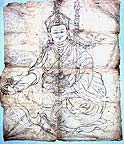
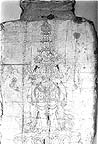
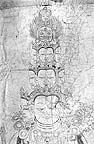
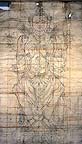
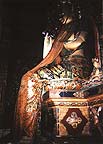
23 In memory of Kuber Singh Shakya, his son Rudra Raj and grandson Raj Kumar, presented this drawing in 1998 as a gift to the Arthur M. Sackler Gallery and Freer Gallery of Art, together the United States National Museum of Asian Art, Smithsonian Institution. On the importance of the drawing see M. S. Slusser, “Drawing of a Seated Maitreya” in Thomas Lawton and Thomas W. Lentz, Beyond the Legacy, Anniversary Acquisitions for the Freer Gallery of Art and the Arthur M. Sackler Gallery (Washington, D.C: Freer Gallery of Art and Arthur M. Sackler Gallery, 1998), 176-77. [back]
24 Written communication. [back]
25 For an example see Slusser, Nepal Mandala vol. 1 (Princeton: Princeton University Press, 1982), 206-07. [back]
26 Certified at least to A. D. early seventh century by a repoussé image dated in accordance with 607 and clearly earlier still since the dated image replaced a forerunner that “had become dilapidated with the passage of time” (Slusser, “On the Antiquity of Nepalese Metalcraft,” 84-88). [back]
|